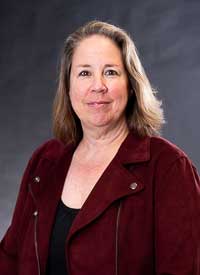
What makes people follow a dictator—and what makes them decide to fight back? That
is the question that fascinates Paige Tan, Ph.D.
Tan is a professor of Political Science at Radford University who studies dictatorships,
democratization, political movements, and international politics. She originally became
a China scholar, but after traveling and living in Southeast Asia, she began noticing
something bigger: dictators in very different countries often use surprisingly similar
tricks to stay in power—controlling information, manipulating rules, and convincing
people that the system is working in their favor. She was hooked.
Today, Tan is especially interested in the people who challenge dictators and authoritarian
governments. She has great admiration for people such as Alexei Navalny (Russia),
Ai Weiwei (China), and Srdja Popovic (Serbia), who have risked their freedom and safety
to challenge powerful regimes.
Her work has taken her around the world. Tan has traveled to 26 countries, including
Egypt and Italy. Along the way, she has met people from very different political
and cultural backgrounds, traveled up rivers and through jungles, and experienced
some situations that were far more adventurous than anything she could have planned.
For Tan, being a political scientist means getting out into the world and trying to
understand how people actually experience politics.
But Tan's favorite part of being a professor is what happens when students realize
they can do something about the problems they study.
With colleagues, she created Radford's Wicked Festival, an interdisciplinary showcase in which hundreds of students each year tackle difficult
public problems and develop solutions. Her students have taken on everything from
improving knowledge about sexually transmitted infections on campus to figuring out
how people might challenge dictatorships in Venezuela, Saudi Arabia, and North Korea,
to exploring ways to discourage China from invading Taiwan and stopping deforestation
in the Amazon.
The goal isn't to pretend that complicated problems have easy answers. It is to teach
students that they are capable of engaging with problems that matter. And sometimes,
that changes how students see themselves. Those moments are what keep Tan excited
about teaching.
Why study Political Science? Tan's answer is simple: “You're studying the science of all of us—what we do together, how we fight, and
how we collaborate.” Political Science can help students understand how the world works, but it can also
help them figure out how they might make it better. And, Tan believes, that's a pretty
exciting thing to study.
Tan holds a Ph.D. in Foreign Affairs from the University of Virginia and a master's
degree in International Public Administration with an emphasis in Chinese from the
Monterey Institute of International Studies. She is a winner of two campuswide awards
at Radford: Distinguished Service and Contributions to Faculty Development. She is
also a former Fulbright Scholar to Singapore.
Radford University
Paige Tan
Director, Graduate Affairs/Professor
Political Science, Dept of
- Phone:
- (540) 831-6598
- Address:
-
CHBS Building 5307
PO Box 6945 - Email:
- etan3@radford.edu