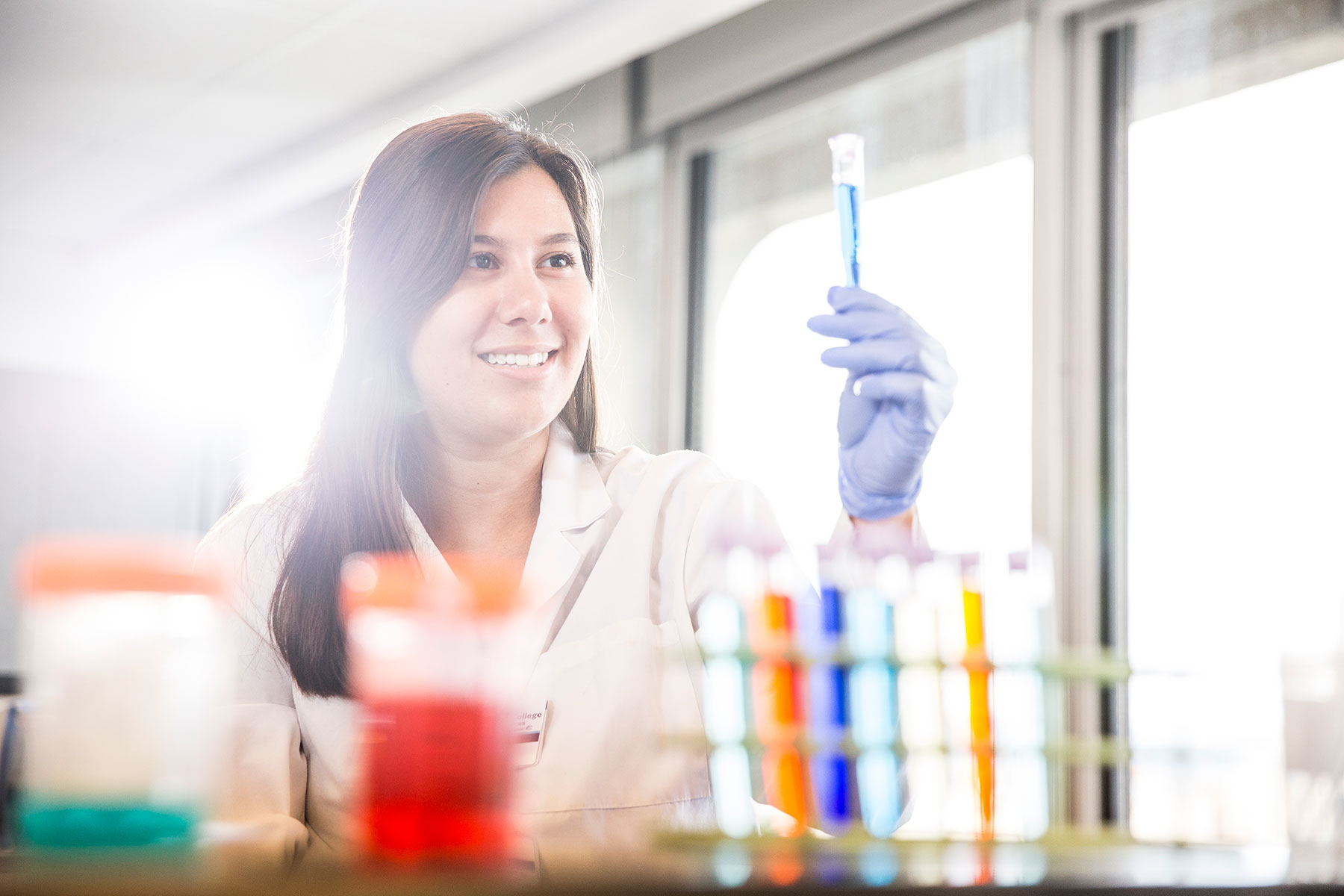
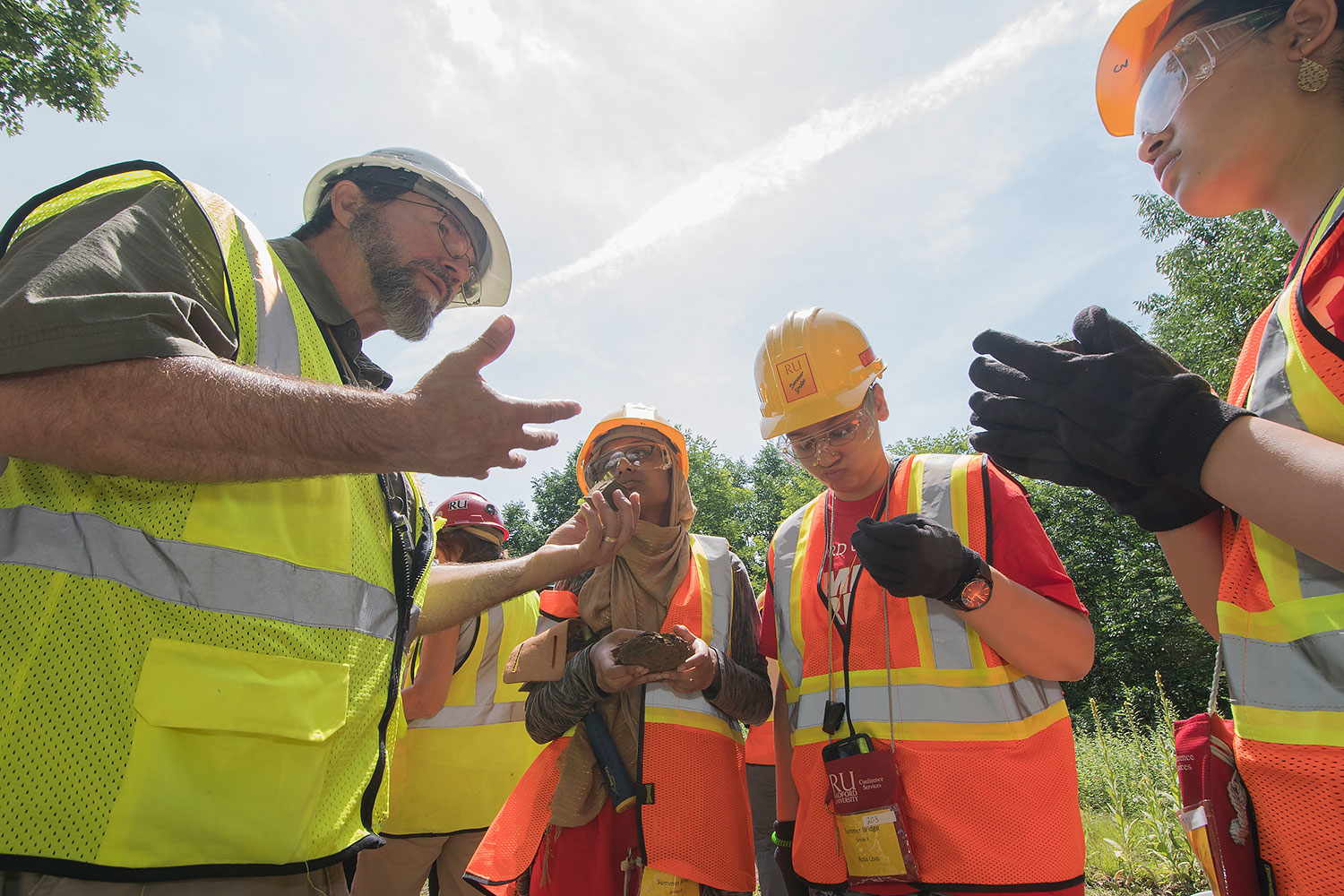
The Biology program offers you the opportunity to develop your science identity through authentic, research-based learning experiences in and outside of the classroom. Each of our unique pathways through our major provides a learning experience that aligns well with your career aspirations, including in biological science, biomedical sciences, environmental science, or education and community outreach.
You'll have the opportunity to:
The Department of Biology offers you the opportunity to complete your degree through three flexible, but focused pathways geared toward your broad, environmental, or biomedical interests.
As you begin your first year, you will build your biological foundation. These required courses introduce you to being a student in your biology major (BIOL 160) and orient your mindset toward the integrative nature of biological sciences (BIOL 111, BIOL 112). The integrative biology courses are unified under a broad centralizing theme to teach you that studying biology cannot be understood from one discipline alone. Past themes have been Urbanization, Fragile Ecosystems, Human Ecology, Pollinators & Plants, The Night, Symbiosis, Stress, The Living Soil, Organismal Dynamics, Community Strength, and People, Places & Plastics.
In your second year, you will start to dive deeper into your foundational courses. These required courses teach you the unifying theory upon which biology is based (BIOL 222) and situate biology within society (BIOL 340). You will also begin taking courses in your respective concentrations. Explore the three concentrations below!
In your third and fourth years, you will be well into your advanced course work. You will showcase your biological knowledge through a required scientific presentation. This presentation will be completed in a course that includes an audience not enrolled in that course, or at a university-, regional-, or national-level event. You will also complete an advanced biology seminar (BIOL 460, 2 credits) where you will master your ability to discuss the primary scientific literature with your peers.
Sprinkled throughout your degree progress, you will complete additional required courses integral to being a biologist (18-19 credits).
The Integrative Biology Concentration will broaden your mind by requiring you to take a variety of courses across biological disciplines. You will choose one course from a list of courses in the following areas:
You will then take 20-23 additional credits in any BIOL course that aligns with your interest!
The Ecology and Conservation Concentration will identify your niche by focusing your coursework on ecology, environmental, and conservation interests. You will take Ecology (BIOL 229) and complete 3-6 research (BIOL 488, BIOL 491, BIOL 492, RARE 410) or internship credits (BIOL 495). You will choose one course from a list of courses in the following areas:
Students then take 6-12 additional credits in any BIOL course that aligns with their interest!
The Biomedical and Health Sciences Concentration will hone your skills toward the medical and health professions. You will take the following required courses (19 credits):
You will then take 12-15 additional credits in any BIOL course that aligns with your goals toward your post-Radford professional schools (i.e., medical, dental, PA, PT, OT, pharmacy)!
Awards
Biological research is important in preparing students to achieve higher levels of scientific scholarship and to be competitive in future academic or career goals. As such, the Biology program offers academic awards to promote scientific excellence and achievement and provide outstanding students with the opportunity to design and conduct research independently or under the mentorship of faculty members.
Clubs and Organizations:
You will be advised on your progress through your major and your careers by a faculty member in your area of interest. We can connect you to internship opportunities that broaden your skills and professional development toward your career. For example, you can be a veterinarian technician in the New River Valley or near your hometown and earn internship credits toward your degree.
Recent graduates from our program work in environmental (e.g., U.S. Fish and Wildlife) and health-related fields (e.g., in the Carilion or Lewis-Gale Hospital System or the Virginia Department of Health), as well as in secondary education in the New River Valley. According to the Bureau of Labor Statistics, the median yearly salary is wide ranging for students graduating with a biology degree, from $55K to $100+.
Detailed List of Career Pathways:
Admission to Radford University.
Freshman Biology majors must register for BIOL 160 in their first or second semester.
Transfer students, and any other students, who do not take BIOL 160 must take either an additional BIOL 460 or one additional Biology elective at the 300-or 400-level of equal or greater credit hours.
Transfer students with credit for BIO101 from a Virginia Community College or equivalent transfer credit may substitute the transferred course for BIOL 111.
Transfer students with credit for BIO102 from a Virginia Community College or equivalent transfer credit may substitute the transferred course for BIOL 112.

4 learning pathways
4 learning pathways
Chose from Biomedical and Health Sciences, Environmental Biology, Biological Sciences, and Education and Outreach.
90% of our students
90% of our students
present their work at a symposium or conference where networking with other scientists is important to developing a science identity.
18 full-time faculty
that are very accessible for 250-300 students in the entire program on average.
50% of our Biology majors
joining a faculty member's research program during their undergraduate journey at Radford.
20% of our students
20% of our students
become authors on a publication or successful grant that funds their research during their time in the undergraduate Biology program.
Undergraduate research is a great first step in the transition from student to professional biologist! Research allows you to follow your own interests and explore aspects of biology that cannot be encapsulated in your coursework. Getting started is easy! Consider what most interests you about biology, find a few faculty members with similar interests, reach out to the faculty and begin working together!
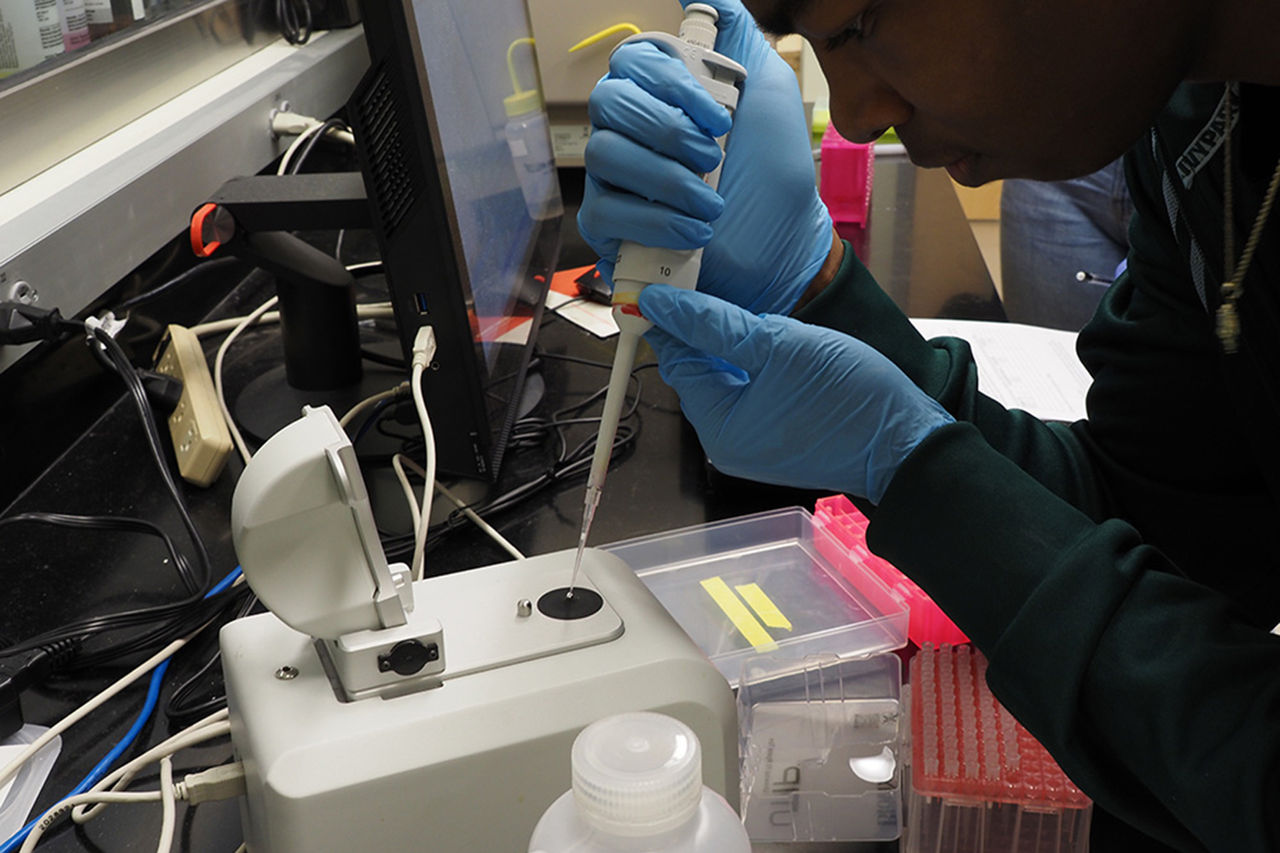
“I loved being a biology major because of the hands-on and research-based learning that takes place in all of the lab courses, in and outside of the classroom!”
Gabi Richards '22
We want to get to know you better and we are excited that you are ready to take your next step and learn more about us. We are here to help you and look forward to working with you during your college search process.