Your degree, your way: The Respiratory Therapy Degree Advancement Track at Radford University
by Mark Lambert
October 01, 2026
Return on investment (ROI) has become a hot topic in higher education in the past few years. Basically, it means the money you invest in earning your college degree pays off after graduation in increased salaries, expanded career opportunities and better job security, among other benefits. Radford University is among the colleges and universities across the country working to develop and implement programs that offer a greater ROI to prospective students, while also being flexible, cost-effective and accessible.
An example of this type of program at Radford is the Respiratory Therapy Degree Advancement Track (DART), offered at Radford University in Roanoke. Specifically designed to meet the needs of practicing respiratory therapists, the program allows professionals who have completed or are anticipating completion of an associate’s degree in respiratory therapy to finish a bachelor’s degree while continuing to work. For graduates, the benefits can lead to expanded job opportunities and security, pathways to new healthcare careers or bridges to graduate degree programs.
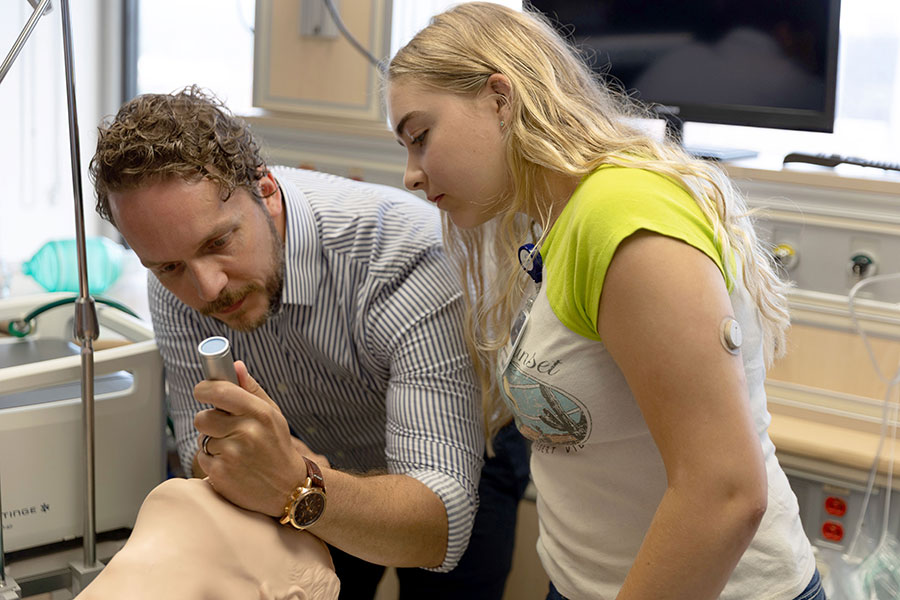
That was certainly the case for Seth Smith, a Franklin County native and manager of respiratory care at Carilion Franklin Memorial Hospital (CFMH) in Rocky Mount, Virginia. Smith, who had already earned an associate’s degree in respiratory therapy and had 13 years of work experience under his belt, stepped into a management role at CFMH and realized that he wanted to continue growing both professionally and as a leader.
“Advancing my education felt like a natural next step,” Smith said, “and the DART program at Radford provided an opportunity to build upon my clinical background while gaining knowledge that would be valuable in healthcare leadership.”
Smith completed the program in about two years as a part-time student and really appreciated how it is tailored to each student's needs, including the curriculum and the time needed to complete the degree. The program is offered in a fully online format, with a customizable curriculum that gives students coursework specific to their goals while allowing them to continue working.
“The structure of the program allowed me to continue working while pursuing my bachelor's degree, which was extremely important to me,” Smith said. “My associate degree provided the clinical foundation that allowed me to begin my career as a respiratory therapist, but the DART program gave me the opportunity to build upon that foundation and expand my education beyond the clinical aspects of respiratory care.”
Douglas Wright, DART program director and an associate professor of Respiratory Therapy, said the program’s accessibility and flexibility are intentional and important to the success of students.
“We design the program with the student’s interests, professional goals and potential future educational plans in mind,” Wright said. “I have conversations with many of our students about graduate school and their longer-term educational goals, and those discussions can help us think about how they use the flexibility within the program to prepare for what they may want to pursue next. Ultimately, I tell students that the degree can be both an endpoint and a stepping stone.”
Smith adds, “The program helped broaden my understanding of other important aspects of healthcare, particularly areas such as hospital finances, research, evidence-based practice and leadership. These are areas that I now encounter regularly in my management role, and the knowledge I gained through the program has helped me become a more well-rounded healthcare professional and leader.”
In addition to the customizability of the program, DART is also an affordable option for students. During the recent accreditation visit by the Commission on Accreditation for Respiratory Care, the site visitors specifically recognized the program's affordability.
“From a student perspective, the cost of a program can be an important factor when deciding whether and where to pursue a bachelor’s degree,” Wright said. “Our program at Radford is a very affordable option for working respiratory therapists who may have limited financial resources or who are using employer tuition reimbursement or other educational benefits. Our goal is to provide an accessible pathway for practicing respiratory therapists to earn their bachelor’s degree without creating an unnecessary financial barrier.”
Wright added that while cost is a factor, many students are also interested in a program where they will be supported by engaged faculty, challenged academically and prepared for continued professional growth.
“The students in our program learn from capable, compassionate and dedicated faculty who genuinely want to see them succeed,” Wright said. “Although our courses are online, we take a very personal approach to teaching. Our faculty remain actively engaged in their courses and with their students, and we work to create an environment where students feel supported rather than simply completing coursework independently.”
That personal touch makes the DART program stand out among its competitors. Smith said that his experience in the program was very positive and something he would advise other respiratory therapists to consider, adding that earning a bachelor's degree is an excellent way to continue investing in yourself personally and professionally.
“I can’t say enough positive things about my experience with the program,” Smith said. “Looking back, I am very thankful that I made the decision to continue my education at Radford. The knowledge and experience I gained have been valuable in my current leadership role and have provided a strong foundation for continued professional and educational growth.”
Wright noted, “I want prospective students to understand that the program is not simply about earning another degree. It is an opportunity to build on the experience they already have as respiratory therapists, expanding their knowledge and professional skills, and positioning themselves for continued growth throughout their careers. It’s a first step in the next phase of their lives and careers.”
More information about the Respiratory Therapy Degree Advancement Track can be found on the Radford University website. Those interested in applying should contact the Office of Admissions at 540-831-1000 or via email at rucadmissions@radford.edu.