“The opposite of addiction is not recovery. The opposite of addiction is community.”
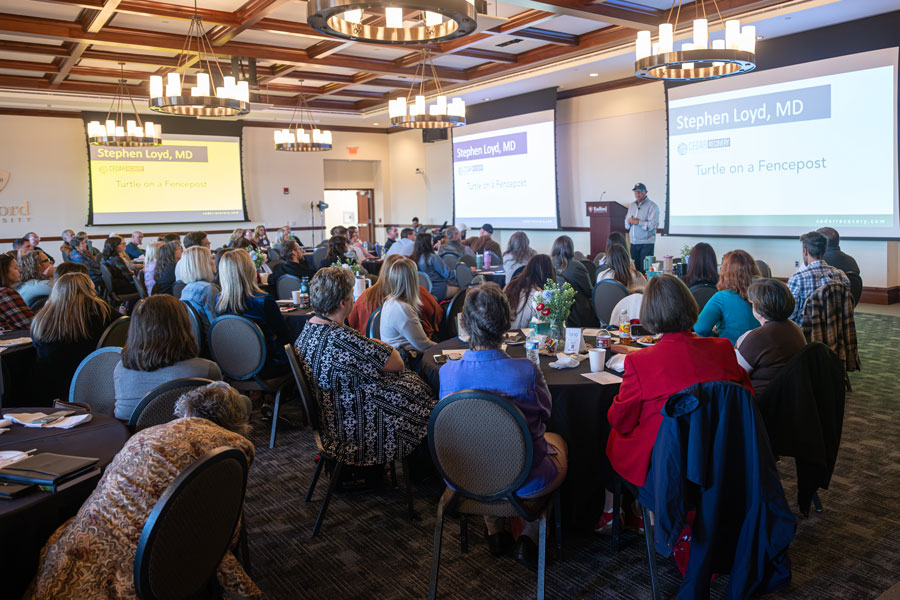
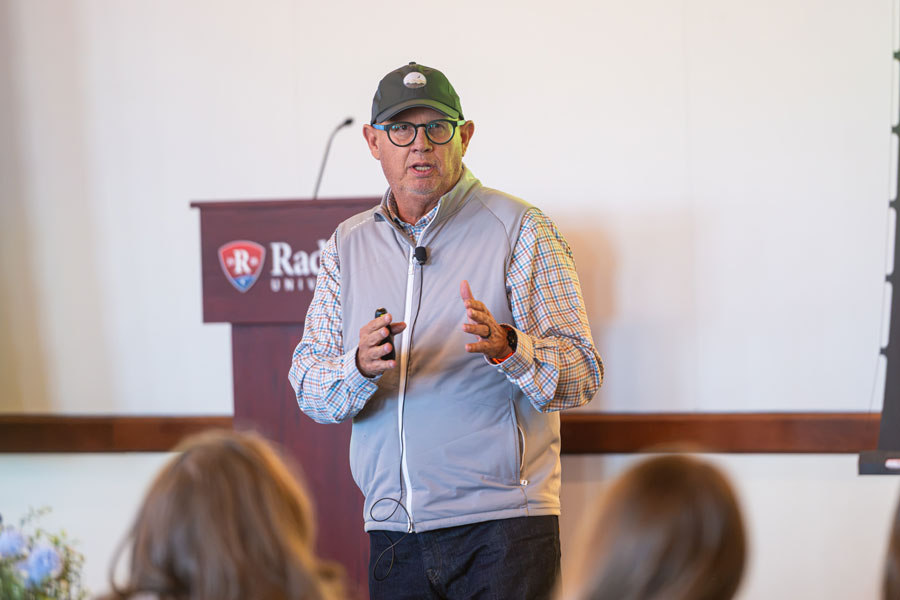
That was one of the powerful messages shared by Stephen Loyd, chief medical officer at Cedar Recovery, during Highlander HOPE’s The Next Chapter event Nov. 3 in Kyle Hall 340.
Part of Radford University’s Substance and Violence Education Support Services (SAVES), Highlander HOPE supports students in recovery and their allies by providing opportunities to connect, focus on well-being and succeed academically. Approximately 90 students, faculty and staff came together to hear compelling stories about the loss of loved ones due to addiction, personal stories with addiction, recovery, and breaking the cycle of substance abuse.
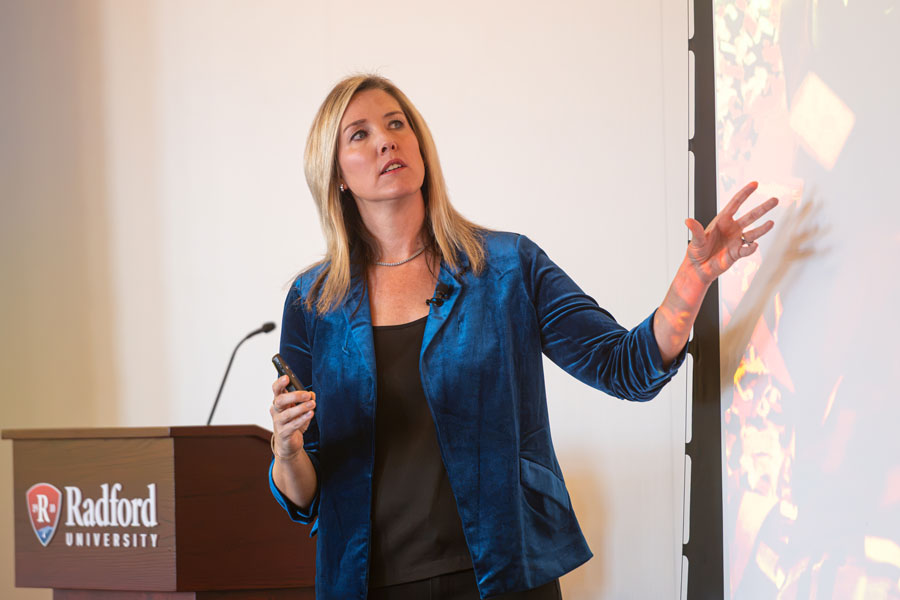
Keynote speaker Lauren Sisler, an ESPN broadcaster from Roanoke, Virginia, shared her personal story in a speech entitled “Becoming Shatterproof: The Pathway to Resilience and Purpose.” She spoke of losing both parents and later learning that their deaths were connected to accidental overdoses. Later, after losing her older brother, Sisler said she began to better understand how devastating loss can shape one's sense of resilience and purpose.
Loyd’s speech, “Turtle on a Fencepost”, covered his personal experience with addiction. Loyd discussed how addiction affects individuals, ways to support others with substance abuse and available recovery resources. He also explained how the brain begins to heal during recovery.
While the keynote speakers shared their personal stories and experiences with addiction and recovery, the event also brought light to the importance of having these conversations within the university and community, attendees said.
Nia Lopez, a student success advocate at Radford University, indicated the importance of making sure students receive the information and support they need.
“Students are on their own for the first time and are making decisions. The more information
we have, the better equipped we will be to support those who need it,”
Lopez said.
Breanne Neff, also a student success advocate, said conversation “reduces the stigma associated with substance abuse and allows us to have more transparent conversations with members of the university and community about substance abuse and its effect on individuals’ lives.”
After the two keynote speakers, attendees had the opportunity to hear from a panel of individuals who shared their own experiences with addiction, stories of loved ones impacted by substance abuse and advice on how to support those who are struggling.
The conversation continued with a presentation by Michelle Harris, clinical director at The Well, a women’s facility associated with Eagle’s Nest Regeneration, a faith-based addiction recovery organization that offers an eight-month recovery program.
Cora Taylor, associate director of SAVES, closed the conference by sharing personal thoughts and bringing the dialogue back to the importance of this event, which is community.